The yeah nahs of product market fit
· 9 min read · Sachee Perera
You can't sell your way to product-market fit. Find the overlooked segment that won't be polite. They're the ones who'll save you.
"Nah, your product looks great, mate. It just wouldn't work for us."
I'm three Swanny D's deep at an Australian Drilling Industry Association (ADIA) sundowner, talking to another drilling contractor MD.
This is the fifth time I've heard some version of this.
"Why not?" I ask.
"We're different. Your product is designed more for the miners."
And that's when it made sense to me.
They'd been overlooked for so long, they couldn't even imagine being THE customer.
Every software vendor had built for the big mining companies. Contractors were expected to adapt, workaround, make it fit.
So when someone actually built FOR them? Their first instinct was: "This can't be for us."
The Choice Every Early-Stage Founder Has to Make
In the early stages of your company, you have a choice:
Option A: Go out and try to sell.
Option B: Go out and find people who'll help you build something worth selling.
Most founders instinctively chase Option A. It feels like progress. You're "doing sales." You're "generating revenue." You're "validating the market."
Except you're not.
You're trying to systematize something that doesn't work yet. You're productizing a GTM motion before you have problem-solution fit. You're building a sales engine for a car that doesn't run.
And then you hit a wall. So you tweak the pitch. Hit another wall. Adjust the pricing. Another wall. Refine the demo. Wall after wall after wall.
Because here's the thing: you can't sell your way to product-market fit.
You can only learn your way there.
And that requires a fundamentally different type of early relationship: not someone who'll politely buy your product, but someone who'll brutally tell you everything that's wrong with it.
The first gives you revenue. The second gives you a company.
What Five Years at the Pub Taught Me
I spent the better part of five years talking to drilling contractors. Mostly at the pub. (I miss this.)
During that time, we won over the hearts and minds of the majority of the exploration drilling industry. Small businesses, mid-tiers, even enterprise contractors. CorePlan became the platform they chose.
But here's the thing: I didn't win customers.
I made friends. ❤️
Real friendships across an entire industry. And there's something about drilling contractors that I truly love: the brutal honesty, the upfront no-bullshit-ness. It's almost unique to them.
Because here's what most people miss about drilling contractors: they're heavily caring and supportive. They genuinely mean well. So when they give you hard feedback, it's not to tear you down. It's because they want you to succeed.
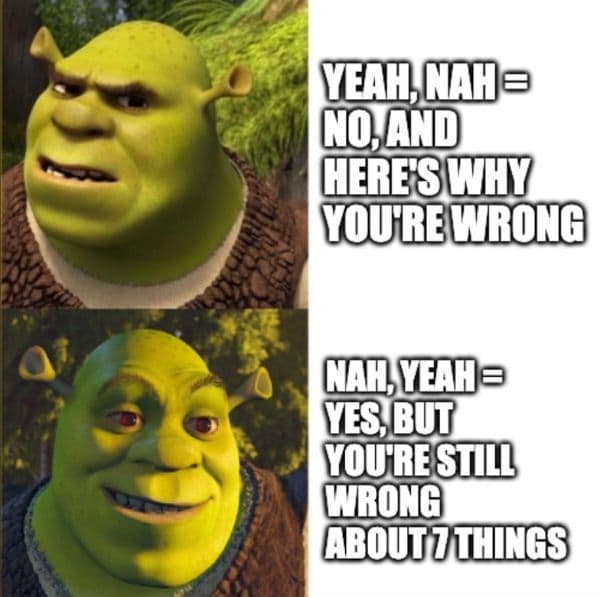
When a drilling contractor says Yeah, nah you're wrong. They're going to give you all the reasons why it won't work for them.
When they say Nah, Yeah but here's seven other things you're wrong about. They're telling you exactly what you need to fix.
That's not rudeness. That's a gift.
This is the exact type of feedback any founder should get from their first 5-10 customers. Because before you can get to product-market fit, you need to establish problem-solution fit. You need people who care enough to tell you the truth.
And only then, once you've learned your way to something that actually works, should you start systematizing and scaling sales.
Why Big Corporates Will Waste Your Time
Most early-stage mining companies would chase meetings with the big flashy mining companies, the ones with "digital transformation roadmaps" and "innovation centres."
Why? Because they're innovative, right? They're most likely going to say yes?
Wrong.
Here's what actually happens:
You pitch a big mining corporate. You get 45 minutes of polite nodding. You talk about "strategic alignment" and "synergies." You leave with a vague "we'll circle back after Q3."
Then you wait.
And wait.
And six months later, you're still waiting, while your runway burns and your product stagnates.
Big corporates can afford to be polite. They have budgets for "exploratory conversations." They have entire teams dedicated to "evaluating emerging technologies."
What they don't have is urgency.
There's too much red tape. Too many stakeholders. Too many approval layers.
But here's the deeper problem: most of the time, they're confused about what they're actually trying to solve. They know they have "a problem" somewhere, but they can't articulate it. So they do what big corporates do: they throw tools at it.
New platform. New vendor. New dashboard. Problem solved, right?
Except they never understood the problem in the first place. And they definitely don't understand the tool.
It's the same pattern playing out right now with AI. Every corporate wants to "use AI to be innovative." Ask them what problem they're solving with it and you get blank stares. It's solution-shopping dressed up as strategy.
That's not a customer who'll help you build something great. That's a customer who'll waste 18 months of your life while you chase a moving target they can't even see.
Save the Cheerleader, Save the World
Drilling contractors were a tiny slice of the mining industry. So why focus there instead of the big miners?
Because that's classic beachhead strategy.
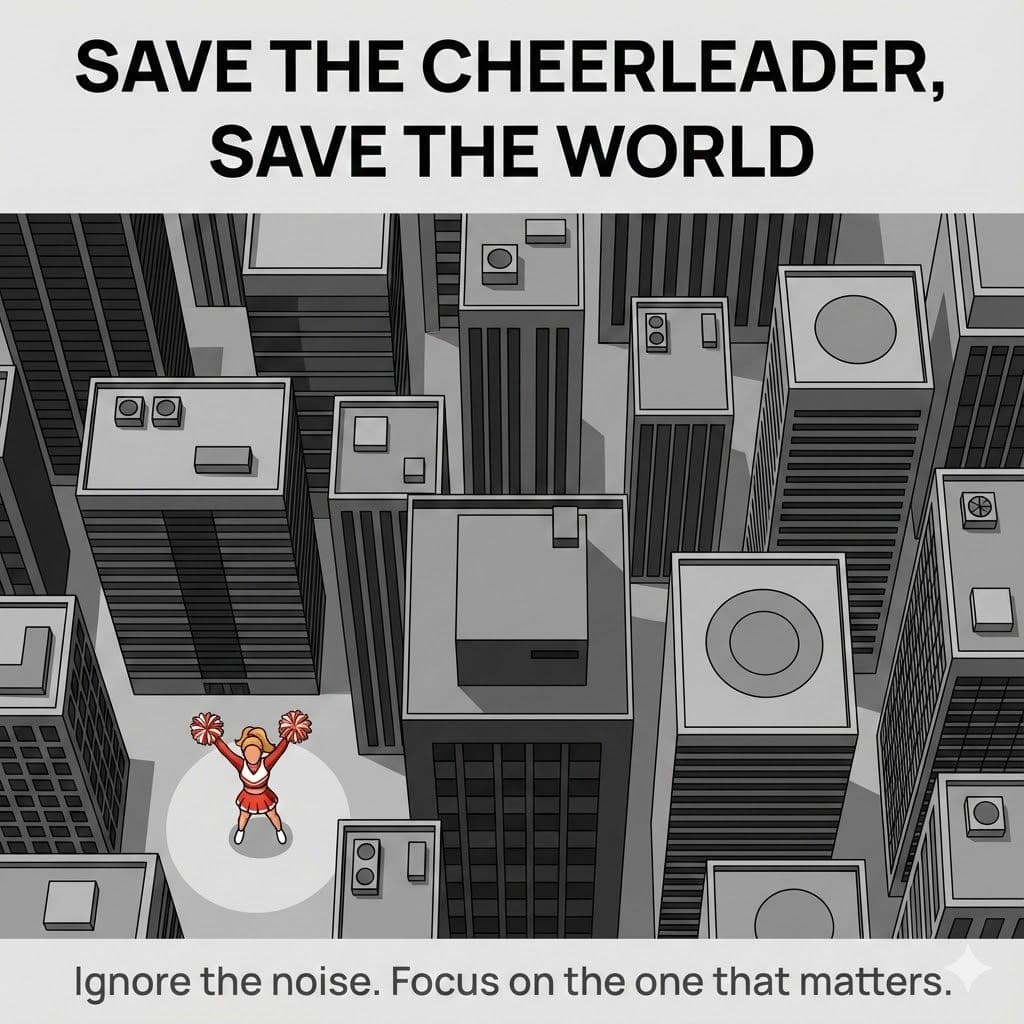
I have this phrase I keep coming back to: "Save the cheerleader, save the world." (Yes, it's from Heroes. Yes, I'm that old.)
The idea is simple: you don't need to win the whole market on day one. You need to win one tight segment so completely that it becomes your launchpad for everything else. Save one cheerleader. The rest follows.
In startup terms, your "cheerleader" is the overlooked segment that nobody else is serving well. Win them. Dominate them. Then expand from there.
Every industry has a segment that's been overlooked. The people who've been told to "make it work" with tools built for someone else. The afterthoughts. The ones nobody bothered to build for.
In mining, it was drilling contractors. In hospitality, it's often the independent venue managers, not the corporate chains. In accounting software, it's the small practitioners who need more than spreadsheets but can't afford enterprise tools.
These aren't the obvious customers. They're the strategic ones.
Here's why overlooked segments make ideal beachheads:
They have acute pain. They've been making do with inadequate solutions for years. The problem isn't theoretical. It's daily.
They have no alternatives. So they're willing to work with something imperfect if it's actually built for them.
They have real urgency. Unlike corporates, they can't afford to wait 18 months for a "strategic review."
They have no patience for bullshit. Their time is too precious. They'll tell you exactly what's wrong, exactly what they need, and exactly why your current solution won't work.
Win over one tight, overlooked segment. Dominate it. Then expand from there.
That's your beachhead.
But here's the thing about beachheads: you don't win them with customers.
Early Adopters vs. Customers
In the early days, you don't need customers.
You need early adopters. Or as I called them earlier: cheerleaders.
What's the difference?
Customers want a finished product that solves their problem right now. They compare you to established alternatives. They expect reliability, support, and polish.
Early adopters have a problem so acute they'll tolerate your bugs. They'll yell at you if your pricing is wrong. They'll tell you your value prop misses the point.
Not because they're mean. Because they need your shit to work.
Most founders try to sell to the mainstream market before they've proven anything with early adopters. That's backwards. You can't skip straight to scale. You have to earn it.
Your cheerleaders are your early adopters. Find them. They're the ones who'll help you build something worth scaling.
The Mistake I'm Watching Founders Make Right Now
I'm talking about this because I'm watching founders right now make the exact mistake I avoided in mining and hospitality (by pure luck) because early adopters forced me to get it right.
I've been back to back with founder interviews (software for accountants, hospitality, banks, whatever) and the pattern is painfully clear.
Somewhere right now:
- Technical founders are tweaking dashboards no one asked for
- Commercial founders are trying to sell before they've listened
- Everyone is optimising for that first big customer that validates the business
But here's the question no one asks:
If your early mob is being polite, are they actually helping you?
Or is it the early partners who tell you your product is half-baked, your pricing makes no sense, and your value prop misses the point?
The polite ones feel good. They validate your ego. They make you think you're on the right track.
The brutal ones feel terrible. They make you question everything.
But only one group actually makes your product better.
And here's the payoff when you find that group:
The Counterintuitive Truth About Product-Market Fit
There's a popular definition of product-market fit from Steve Blank:
"The process in which you have found a group of customers and a market that reacts positively to your product: you solve a problem and you get paid for it."
But there's a critical addition that most people miss:
You can replicate this motion without having to drastically change for every new customer in that segment.
True product-market fit means you can win the next 10 customers using the same core offering, positioning, and sales motion you used for the last 10.
If every deal requires significant customization, you have customer fit but not market fit.
The Action: Get Out of the Building
So if you're in early stage right now, here's what I want you to do:
Take off your sales hat.
You're not trying to close deals. You're trying to learn.
Get out of the building.
Your early adopters aren't going to come to you. You have to go find them: at events, in communities, wherever they actually spend time. Ask yourself: Where do my potential early adopters actually gather?
Have real human conversations.
Not discovery calls with a script. Not demos with a pitch deck. Just conversations with people you claim you want to solve for. Ask yourself: Am I getting polite validation or brutal feedback?
Find your drilling contractors.
Every industry has them. Your cheerleaders. The overlooked, the underserved, the people with pain so acute they can't afford to be polite.
The ones who'll give you the "Yeah, Nah" before you waste six months building the wrong thing.
Go find yours.
They're the ones who'll save you.