Sachee Perera
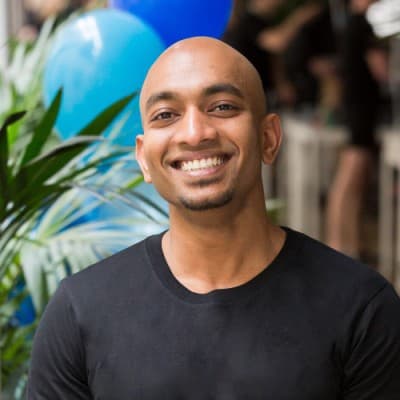
Howdy, I'm Sachee. Nice of you to ask.
Technically I'm a mechanical engineer. I ended up spending 18 years in sales, market launches and company building.
there's morethat's enough
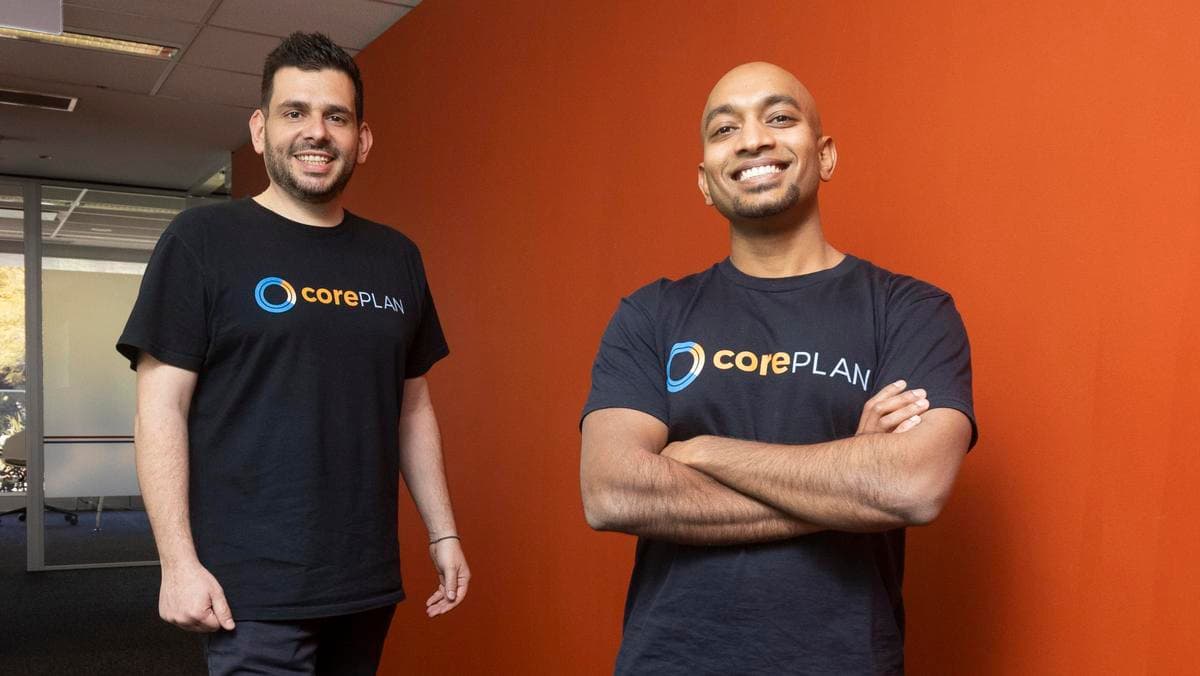
The biggest build was CorePlan. I helped turn an early mining-software business into the leading mining SaaS in Australia and around the world: $7M ARR, 100+ customers, 50+ people globally.
Before that I launched Uber Eats and Sidekicker in WA, worked on ships, helped commercialise Perth Is OK and got serious about photography for a while.
CorePlan exited in 2025. Now I write The Markdown and build software through Lovabo. I also advise and invest when I like the people and understand the problem.
How I ended up here.
“Learning business”
Telstra and Accor Plus
During uni I started on a Telstra sales floor doing data entry and screening broadband applications. Not exactly the dream. But I fell in love with the craft of sales. Not the hustle, the craft. Figuring out what someone actually needs versus what they say they need. I ended up Top National Consultant out of hundreds of reps, which still feels a bit surreal for someone who never planned to be in sales.
there's morethat's enough
Then retention, where something clicked that I still use today: the stated reason someone leaves is rarely the real reason. Discovery changes outcomes more than persuasion ever will. And coaching (real coaching, not just feedback) is what turns individual performance into team performance. Four of my team members got promoted into management during my time.
At Accor Plus I got to zoom out and design for retention at the programme level. I took on an underperforming loyalty programme and rebuilt the sales strategy and team culture from the ground up. It became the programme’s highest growth period in a decade, with a 71.67% renewal rate, the highest in APAC. The lesson wasn’t the numbers. It was that retention and expansion compound when the customer experience is designed deliberately, and that good coaching only scales when you build the system that makes it repeatable.
“Launching Tech”
UberEATS Perth and Sidekicker WA
Perth didn’t know what UberEATS was. No brand recognition, no case studies, no playbook. Just a list of restaurants and a lot of walking. This chapter taught me that early-stage growth is a completely different muscle. Not retention, not systems. Pure demand creation.
there's morethat's enough
At UberEATS, I was on the Perth launch team. Cold outreach, in-person visits, selling a vision that hadn’t been proven locally. I personally closed 117 restaurant partnerships, 39% of the entire platform at launch. Not because I’m some sales genius. When you’re launching from zero, there’s nobody else to do it. You just show up every day and figure it out.
At Sidekicker, same thing. First boots on ground for the WA market. Building the team, the pipeline, and the GTM from scratch.
Both taught me the same thing: proving a market is different from optimising one. Zero-to-one growth happens through buyer behaviour and direct contact, before there’s anything to systematise. You do the work first. That lesson became a belief with its own name.
“I called it downtime”
Perth is OK · Austal Ships / MARINELINK · Photography
This is the era my LinkedIn can’t explain: a community brand, a shipbuilder, and a camera. Between Sidekicker and CorePlan I let myself explore, and learned to move between worlds that don’t usually talk to each other.
there's morethat's enough
I picked up a camera and got serious about photography. Travelled across Western Australia shooting landscapes and eventually moved into model photography. It taught me visual communication and creative storytelling that quietly showed up in everything I built after.
Perth is OK was one of the most fun things I’ve ever worked on. It started organically. I was a regular at Perth events, constantly posting and promoting the city. Eventually the founders, Luke and Blake, asked if I could help them win commercial clients. As their BD and campaign strategist we landed IKEA, Buy West Eat Best, Captain Cook Cruises, and a bunch of others. The real work was taking something genuinely grassroots, a community built on people loving their city, and making it commercially sustainable without killing what made it special.
Austal Ships was a completely different world. I led product marketing for MARINELINK Fleet, a system that gave ferry operators a live, integrated view of their fleet’s performance, schedule, comfort, and fuel. The challenge was making deep technology make sense to traditional buyers who cared about uptime and cost, not dashboards and AI. COVID killed the industry before we could scale. But bridging complex tech and conservative industries turned out to be the perfect warm-up for what came next.
This era is the bridge: technical products and traditional buyers, community and commercial sustainability, visual language and operator language. That range is what I took into CorePlan.
“Mining SaaS”
CorePlan, Founding COO, 5 years
five years, where everything I’d learned in software, people and business finally came together
there's morethat's enough
Alex Goulios had started Springtech with a vision to digitise the mining industry. Springtech had products, relationships and technical credibility, but no clean customer, category or commercial story. When Alex and I came together, I talked to anyone and everyone in mining to understand what was really going on. And then it hit me. We had to reposition and rebrand the whole thing. Focus on the drilling contractors first (bit like ‘save the cheerleader, save the world’ from Heroes 😅) and build from there. Alex drove the technical foundation while I drove the repositioning, early product strategy, and the full commercial engine from zero: sales, marketing, customer success, hiring, RevOps. We shaped the overall business direction together, in an industry where trust matters more than features and relationships outlast contracts.
The commercial engine had four distinct pipeline channels, each built from zero. Inbound qualification (MQLs), outbound sales-generated leads (SQLs), customer success expansion leads (CSQLs), and a structured referral programme. Each channel had its own scoring model, routing logic, and handoff process. On the enterprise side, I developed Account Based Marketing playbooks for mid-market and enterprise accounts, learning how to navigate the buying patterns of tier 1 mining companies and drilling contractors who had never purchased software before. The combined engine grew to a seven-figure qualified pipeline.
Over five years we grew to $7M ARR, 100+ customers and 50+ people globally. We found a super large (and super loud) gong and banged it every time a new customer came onboard. We threw legendary company parties (the CorePlan Bogan Bash being a personal highlight). And a silly line I wrote early on, “help people in mining work better together in the modern age,” somehow became the actual mission statement.
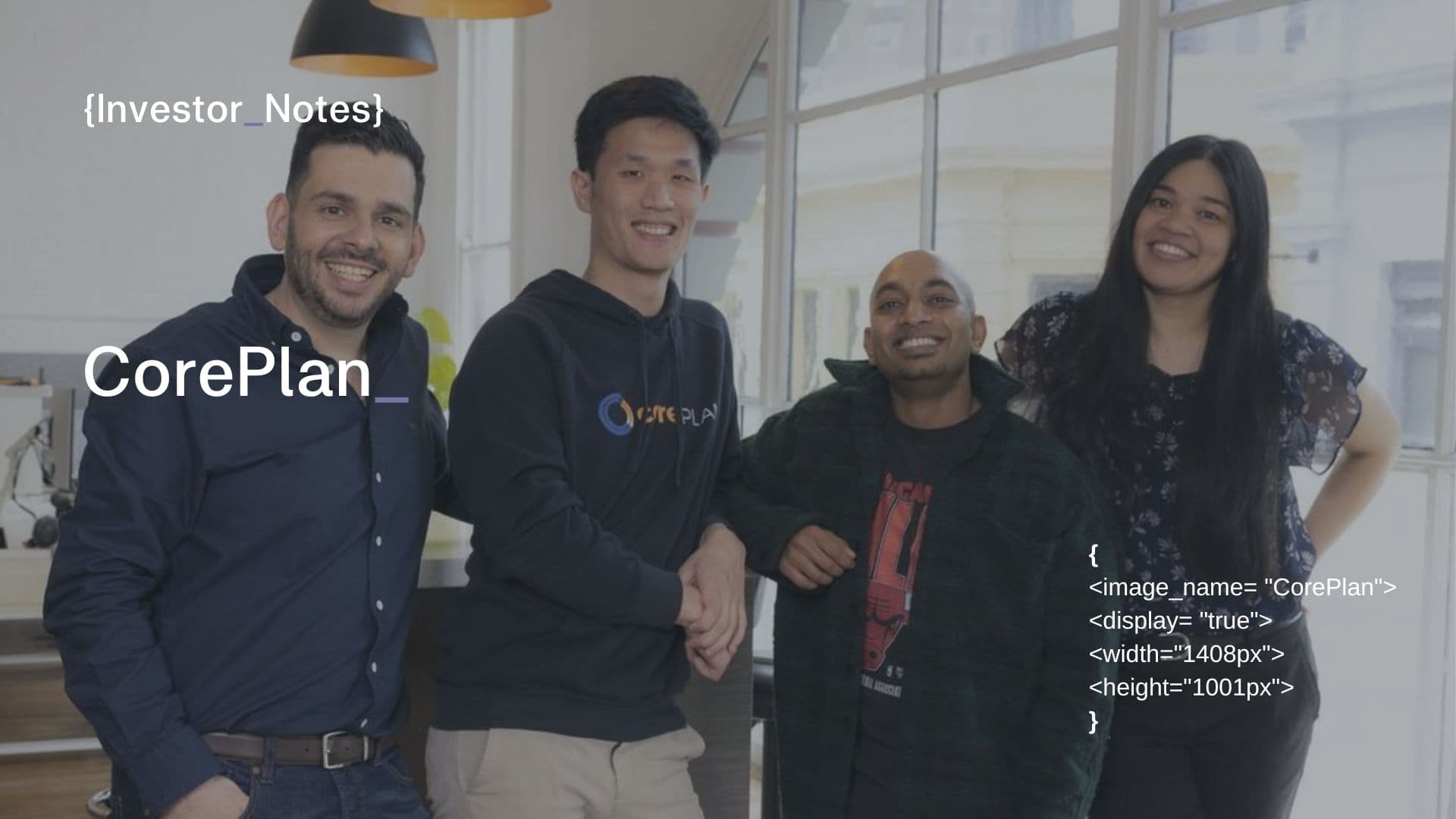
But the part I’m most proud of is the team Alex and I built. A crew of eager, smart, and quirky people who were unusually passionate about the business. Watching them grow into roles they didn’t think they could do. That was the best bit.
The thing CorePlan taught me: the product, workflow, market, brand, revenue system and people system are not separate problems. They are the company.
“Now”
Lovabo · The Markdown · Advisory & investing
CorePlan exited in July 2025. I was supposed to take six months off. Doing nothing lasted about 72 hours.
there's morethat's enough
Now I write The Markdown and build software through Lovabo, mostly for operational industries like mining and construction. I advise a few founders. And I invest when I like the people and understand the problem.
The way I see it.
Four beliefs that connect everything I write, build and back.
Software studio
Lovabo
Est. 2025
Every founder I meet has a brilliant product. And the same pattern of problems.
Founders hear a lot of advice that sounds right.
Three pieces of advice founders hear again and again. None of them are wrong exactly. They just don't hold up once you look closely.
Myth #1
“A great product sells itself.”
Reality
It still needs a buyer who understands it, a reason to act now, and a company capable of delivering the result it promised.
Myth #2
“Hire a salesperson to figure it out.”
Reality
A salesperson can't inherit a process the founder has never proven.
Myth #3
“More capital will solve the problem.”
Reality
Capital accelerates the company that already exists. It doesn't create customer truth, commercial judgement or operating discipline on its own.
The questions underneath the symptoms
What have customers actually paid for?
Where is the founder still the bottleneck?
What must be proven before the company hires?
Is this genuinely software, or a service with software around it?
What happens after the customer says yes?
Why will this company win in this market?
What evidence would change the decision?
I look at the same three questions,
whether I'm advising or investing.
Problem, proof, system. In that order.
Problem
Is the pain real, important and owned?
The founder understands the buyer, the workflow and why someone actually needs this solved.
Proof
Will customers act?
People are paying, using the product, or changing their behaviour in a way that backs up the claim.
System
Can it repeat without heroics?
Selling, implementation and customer success stop depending entirely on the founder's memory and effort.
Most commercial problems are not isolated.
They are connected parts of the same system.
Whether I'm advising a founder or considering an investment, I look at the full loop: the customer, product, selling process, implementation, retention, people and the evidence coming back.
Two ways I get involved
Advisory
I advise a small number of founders where I can materially improve the company's commercial judgement and help build the capability inside the business.
- ✓Hands-on capability transfer, not outsourced selling.
- ✓Direct feedback tied to real execution.
- ✓Rare, founder-specific and equity-aligned.
My advisory book is currently full. Exceptional founders can still make themselves known.
Investing
I make small personal investments in founders I believe in, where I understand the market and can add more than money.
- ✓Personal angel investing, not a fund or a programme.
- ✓Early B2B, vertical software and adjacent tech-enabled companies.
- ✓Founder-market fit, customer evidence and business-model truth before pitch polish.
Advisory and Investment are separate decisions. Neither guarantees the other.
Frequently asked questions
My advisory book is currently full. I still hear from exceptional founders, and I'd rather know about you now than not at all.
Founders of early B2B, vertical software and adjacent tech-enabled companies, where I understand the market and the buyer well enough to be useful, not just encouraging.
Sometimes. They're separate decisions with separate reasoning, so one doesn't automatically lead to the other.
Yes. Plenty of founders I invest in, I never formally advise.
Yes, regularly. Investment is its own judgement call, not a reward for advising.
I read what you send. If there's a useful next conversation, I'll be in touch. If there isn't, I'll tell you that too.